Halo Flyover
Microsoft
From Console to Stadium
Unreal Engine Integration & Immersive Fan Experiences
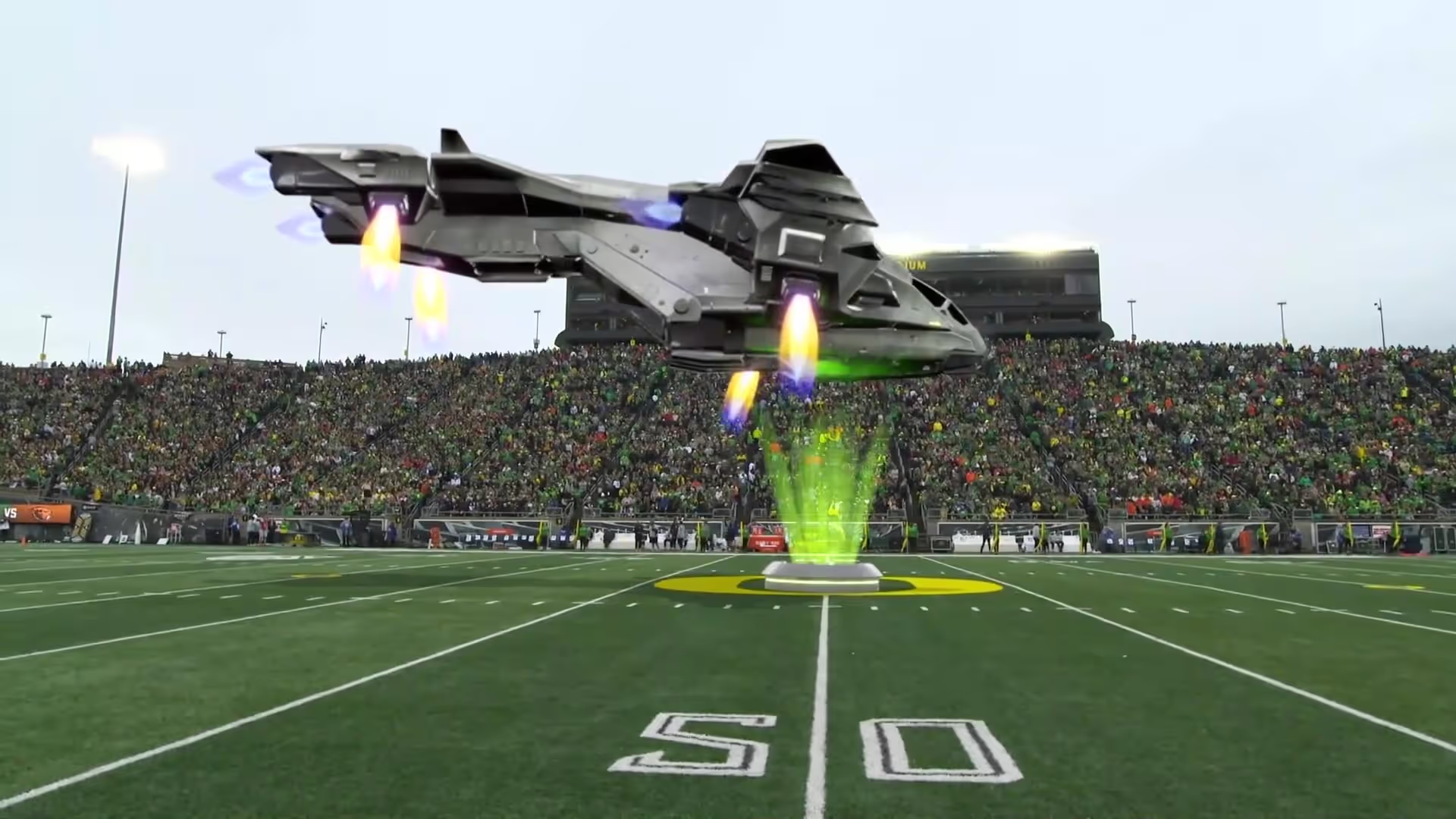
AE Live leveraged its robust Unreal Engine production pipeline to transform game-ready assets into a broadcast-quality augmented reality experience that seamlessly connected the worlds of gaming and live sport. By optimising, animating, and integrating the Halo Pelican into a fully tracked stadium environment, our team delivered a cinematic flyover that felt like a natural extension of the game-day atmosphere rather than a traditional sponsored activation.
Key capabilities include:
- Unreal Engine pipeline for broadcast-ready real-time content
- Integration of existing video game assets into live AR productions
- Accurate previsualisation and camera tracking for large-scale stadium environments
- Simultaneous delivery for in-stadium displays and traditional broadcast audiences
- Broadcast-optimised rendering that maintains visual fidelity and live performance

This workflow enabled Xbox and Halo Infinite to engage fans with an immersive branded moment that resonated both inside Autzen Stadium and with viewers watching from home, demonstrating how interactive entertainment and live sports can come together to create memorable fan experiences.
This workflow enabled Xbox and Halo Infinite to engage fans with an immersive branded moment that resonated both inside Autzen Stadium and with viewers watching from home, demonstrating how interactive entertainment and live sports can come together to create memorable fan experiences.
1. Can AE Live bring video game assets into live broadcasts?
Yes. AE Live specialises in adapting game-ready assets for live broadcast and augmented reality productions using Unreal Engine. We optimise existing models, animations, and environments to perform reliably in live broadcast workflows while preserving the visual quality and authenticity of the original content.
2. How does AE Live use Unreal Engine for live sports and entertainment?
AE Live uses Unreal Engine to transform existing assets—or develop new ones—into broadcast-ready augmented reality experiences. Every model, animation, and visual effect is optimised for real-time production, ensuring reliable performance in demanding live broadcast environments.
Our pipeline combines asset optimisation, camera tracking, real-time controls, previsualisation, and rigorous QA testing to deliver immersive fan experiences that look cinematic, feel authentic, and perform seamlessly on air.
3. Can augmented reality experiences work for both stadium audiences and television viewers?
Absolutely. AE Live designs AR experiences that can engage fans inside the venue through stadium displays and video boards while also translating effectively to traditional broadcast audiences. This ensures branded moments have impact regardless of how fans are watching the event.
5. Why use Unreal Engine for live augmented reality productions?
Unreal Engine enables highly detailed real-time rendering, realistic lighting, animation, and environmental effects that help create broadcast-quality AR experiences. Combined with AE Live's expertise in camera tracking, live graphics, and production workflows, it allows us to deliver immersive moments that enhance fan engagement without disrupting the live broadcast.
1. Can AE Live bring video game assets into live broadcasts?
Yes. AE Live specialises in adapting game-ready assets for live broadcast and augmented reality productions using Unreal Engine. We optimise existing models, animations, and environments to perform reliably in live broadcast workflows while preserving the visual quality and authenticity of the original content.
2. How does AE Live use Unreal Engine for live sports and entertainment?
AE Live uses Unreal Engine to transform existing assets—or develop new ones—into broadcast-ready augmented reality experiences. Every model, animation, and visual effect is optimised for real-time production, ensuring reliable performance in demanding live broadcast environments.
Our pipeline combines asset optimisation, camera tracking, real-time controls, previsualisation, and rigorous QA testing to deliver immersive fan experiences that look cinematic, feel authentic, and perform seamlessly on air.
3. Can augmented reality experiences work for both stadium audiences and television viewers?
Absolutely. AE Live designs AR experiences that can engage fans inside the venue through stadium displays and video boards while also translating effectively to traditional broadcast audiences. This ensures branded moments have impact regardless of how fans are watching the event.
5. Why use Unreal Engine for live augmented reality productions?
Unreal Engine enables highly detailed real-time rendering, realistic lighting, animation, and environmental effects that help create broadcast-quality AR experiences. Combined with AE Live's expertise in camera tracking, live graphics, and production workflows, it allows us to deliver immersive moments that enhance fan engagement without disrupting the live broadcast.